6 stations · 1754-1833
Founding & Early Republic
Colonial unity, the Stamp Act, the Intolerable Acts, the XYZ Affair, and Jackson's vetoes, drawn by British and American artists.
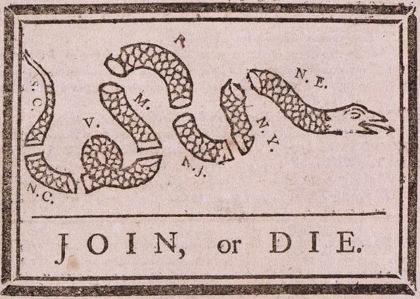
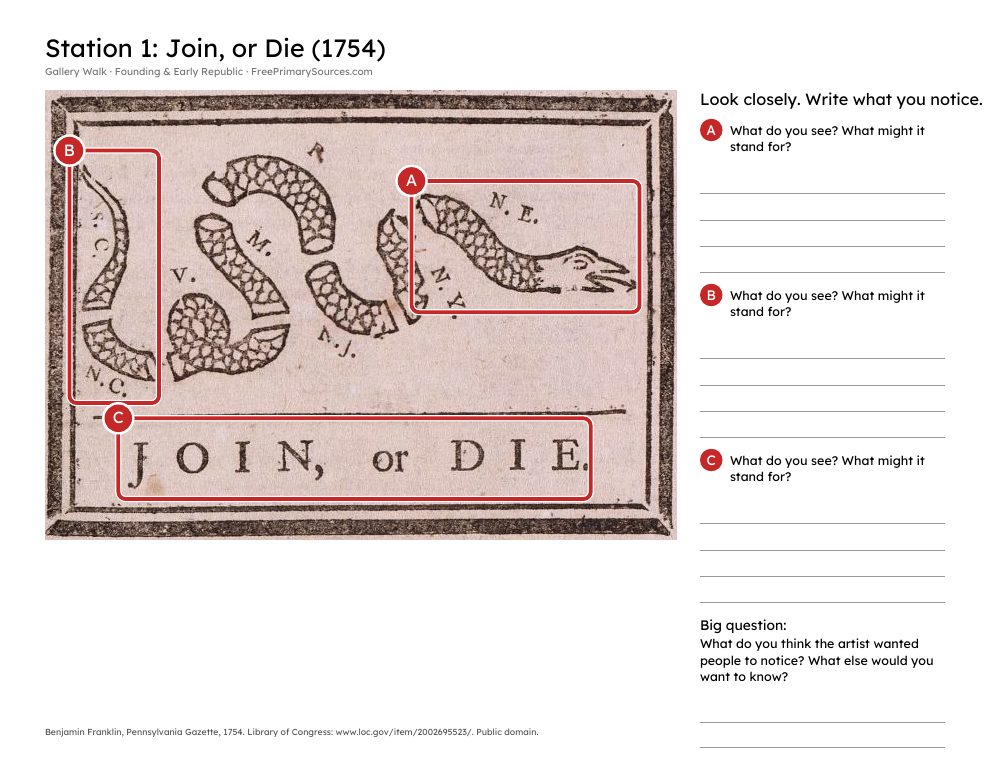
- 1. Join, or Die (1754, Benjamin Franklin)
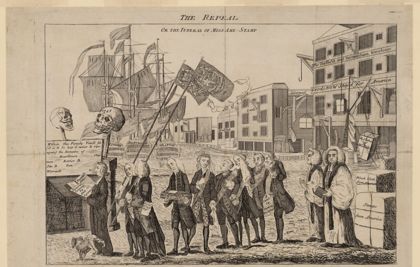
- 2. The Repeal, or the Funeral of Miss Ame-Stamp (1766, Unidentified British artist (often attributed to Benjamin Wilson))
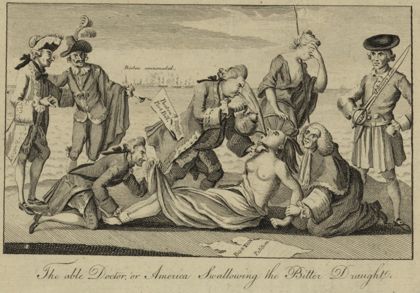
- 3. The Able Doctor, or America Swallowing the Bitter Draught (1774, Unidentified British artist)
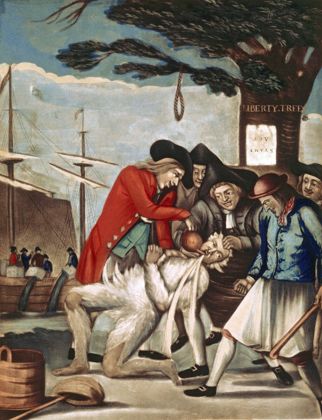
- 4. The Bostonians Paying the Excise-Man, or Tarring & Feathering (1774, Attributed to Philip Dawe)
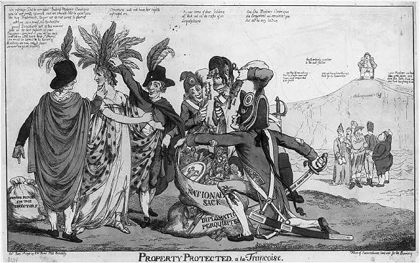
- 5. Property Protected à la Françoise (1798, Unidentified British artist)
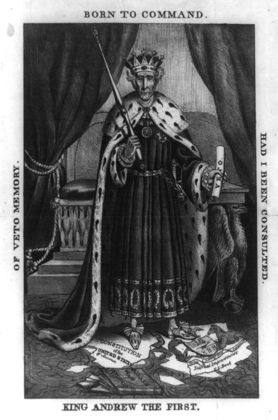
- 6. King Andrew the First (1833, Unidentified American artist)
1754-1833Grades 6-8, 9-12Political cartoons⏱ 30-45 min
For teachers
Viewpoints in this packet
- Join, or Die: Franklin was a Pennsylvania delegate pushing a plan for colonial union.
- The Repeal, or the Funeral of Miss Ame-Stamp: Made for a British audience; many London merchants favored repeal because the act hurt trade with the colonies.
- The Able Doctor, or America Swallowing the Bitter Draught: Published in London, where opinion on the colonial crisis was divided.
- The Bostonians Paying the Excise-Man, or Tarring & Feathering: A British print; some read it as criticizing the crowd, others as reporting colonial anger.
- Property Protected à la Françoise: British-made at a time when Britain and France were at war.
- King Andrew the First: Made by Jackson's opponents (who soon formed the Whig Party); supporters saw his vetoes as defending ordinary people.
5 stations · 1863-1874
Civil War & Reconstruction
Emancipation and the 1864 election from Union, Democratic and Confederate-sympathizing artists, plus Reconstruction violence.
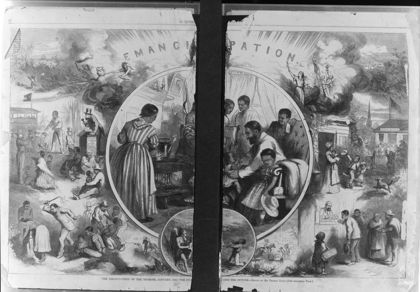
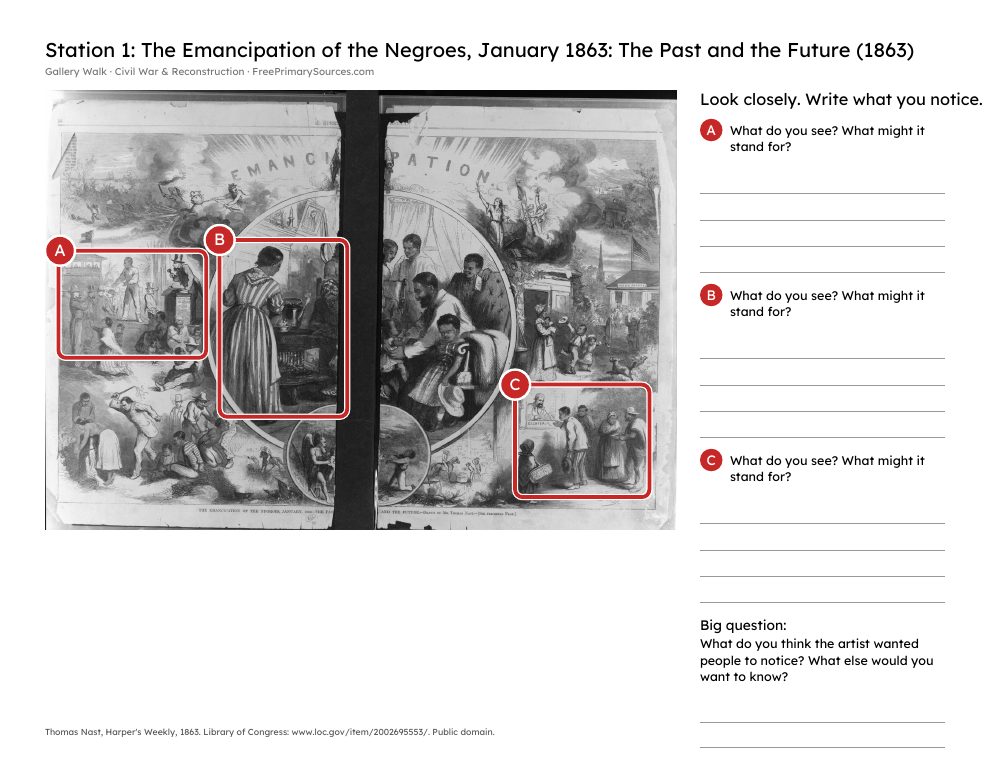
- 1. The Emancipation of the Negroes, January 1863: The Past and the Future (1863, Thomas Nast)
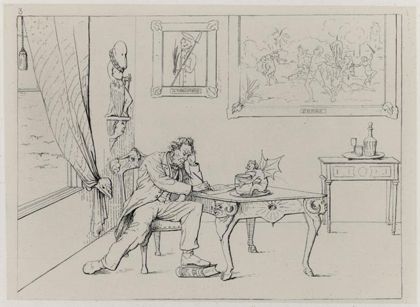
- 2. Writing the Emancipation Proclamation (1864, Adalbert J. Volck)
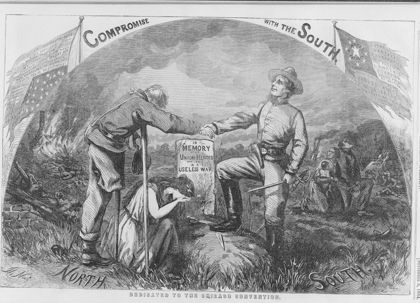
- 3. Compromise with the South (1864, Thomas Nast)
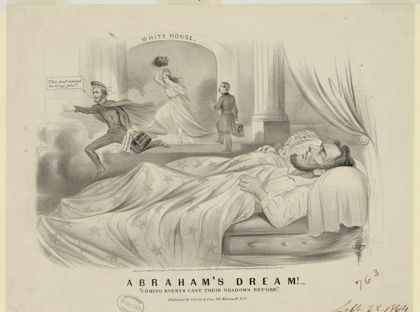
- 4. Abraham's Dream! "Coming Events Cast Their Shadows Before" (1864, Currier & Ives)
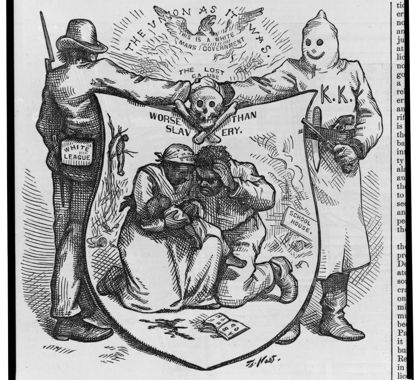
- 5. The Union as It Was: The Lost Cause, Worse Than Slavery (1874, Thomas Nast)
1863-1874Grades 6-8, 9-12Political cartoons⏱ 30-45 min
For teachers
Viewpoints in this packet
- The Emancipation of the Negroes, January 1863: The Past and the Future: Nast and Harper's Weekly strongly supported the Union and the Republican Party.
- Writing the Emancipation Proclamation: Volck was a Baltimore dentist who sympathized with the Confederacy; he printed his etchings secretly.
- Compromise with the South: Nast supported Lincoln's reelection. Democrats argued that a negotiated peace would save lives.
- Abraham's Dream! "Coming Events Cast Their Shadows Before": Supports McClellan and the Democrats; Lincoln won the election that November.
- The Union as It Was: The Lost Cause, Worse Than Slavery: Nast and Harper's Weekly supported federal enforcement of Reconstruction.
5 stations · 1871-1904
Gilded Age: Bosses, Trusts & Tariffs
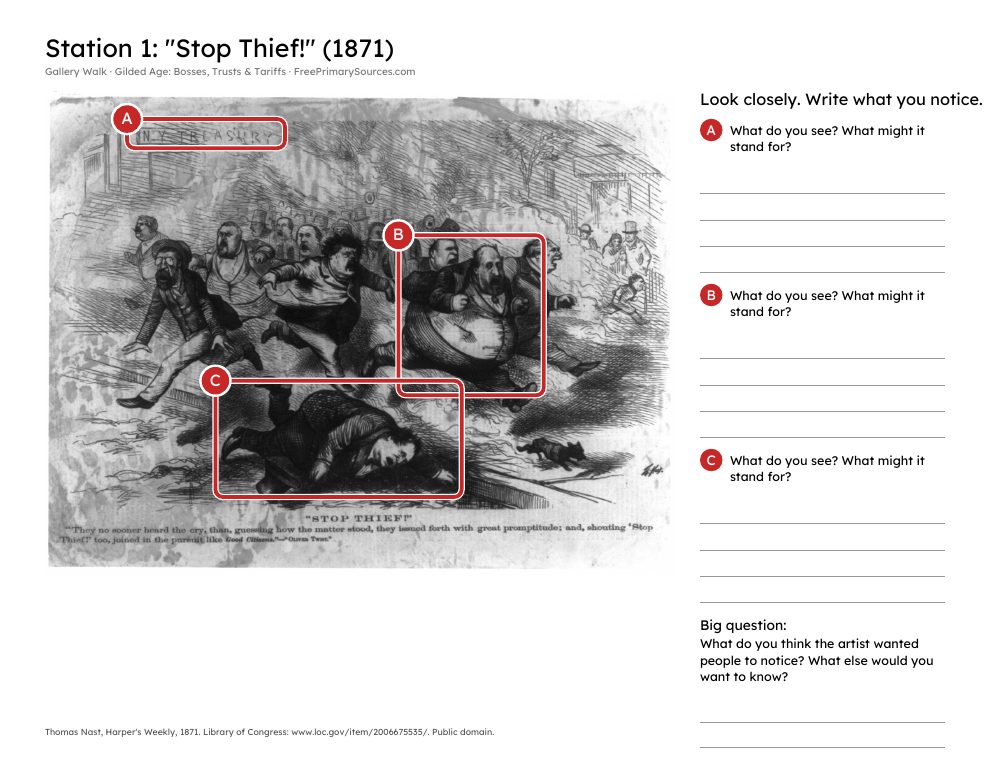
Tammany Hall, trusts, railroads and the tariff debate as seen by Harper's Weekly and Puck.
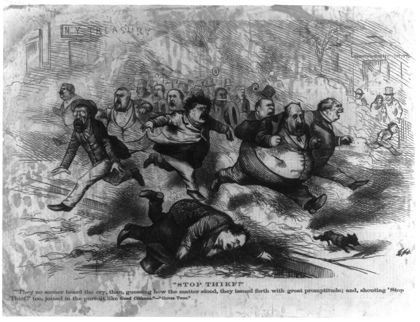
- 1. "Stop Thief!" (1871, Thomas Nast)
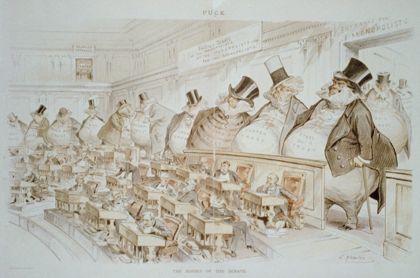
- 2. The Bosses of the Senate (1889, Joseph Keppler)
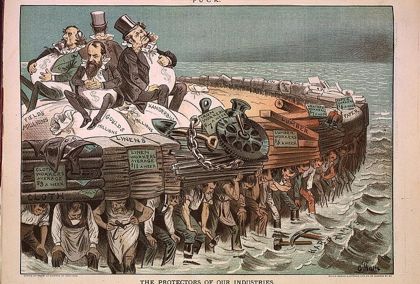
- 3. The Protectors of Our Industries (1883, Bernhard Gillam)
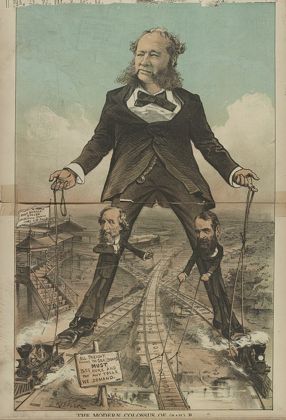
- 4. The Modern Colossus of (Rail) Roads (1879, Joseph Keppler)
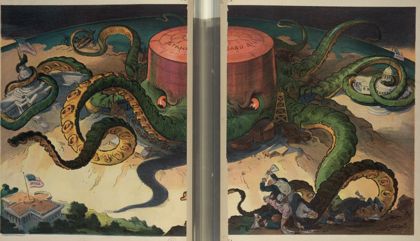
- 5. Next! (1904, Udo J. Keppler)
1871-1904Grades 6-8, 9-12Political cartoons⏱ 30-45 min
For teachers
Viewpoints in this packet
- "Stop Thief!": Harper's Weekly was a Republican paper; Tweed led the Democratic Tammany Hall machine.
- The Bosses of the Senate: Puck generally leaned toward the Democratic Party and criticized high tariffs and trusts.
- The Protectors of Our Industries: Puck opposed high tariffs. Republican magazines such as Judge argued tariffs helped workers.
- The Modern Colossus of (Rail) Roads: Puck often criticized railroad owners; defenders pointed to the growth and lower travel costs railroads brought.
- Next!: Critical of Standard Oil; the company argued its size made oil cheaper and more reliable.
6 stations · 1871-1908
Immigration & Exclusion
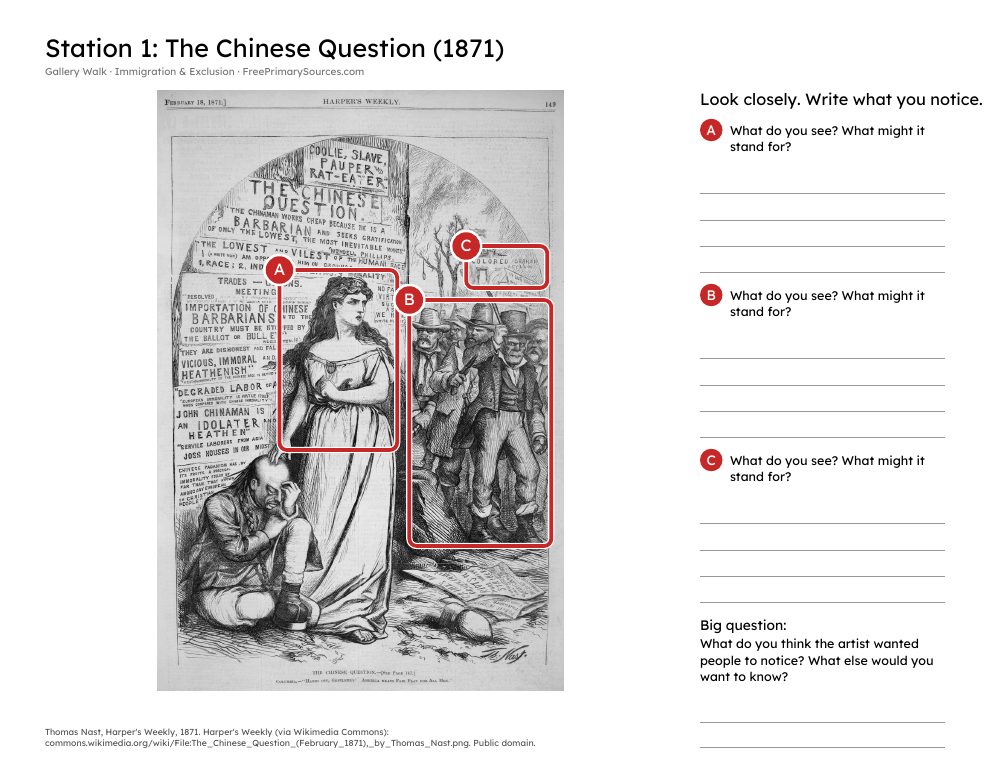
Welcome, restriction and Chinese exclusion, 1871-1908.
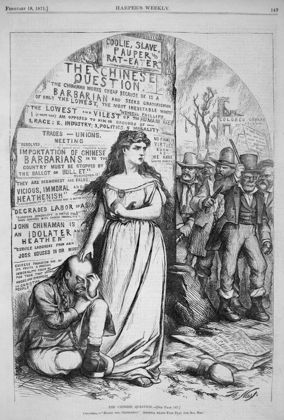
- 1. The Chinese Question (1871, Thomas Nast)
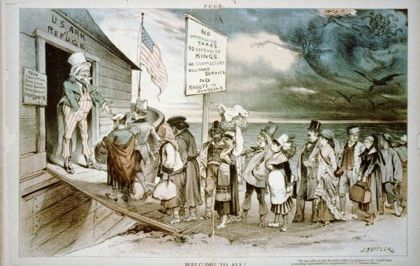
- 2. Welcome to All! (1880, Joseph Keppler)
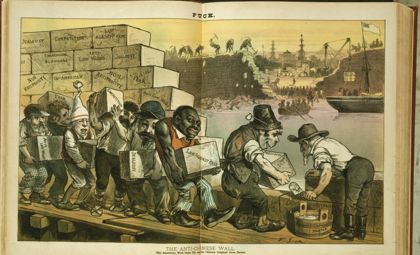
- 3. The Anti-Chinese Wall (1882, Friedrich Graetz)
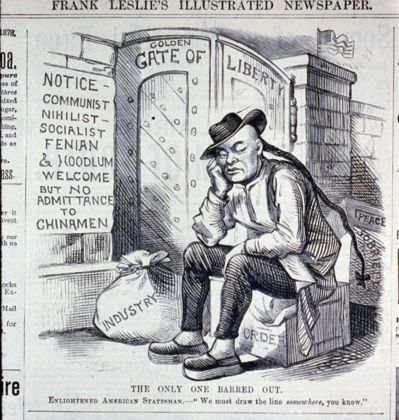
- 4. The Only One Barred Out (1882, Unidentified artist)
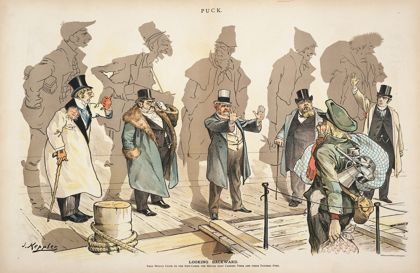
- 5. Looking Backward (1893, Joseph Keppler)
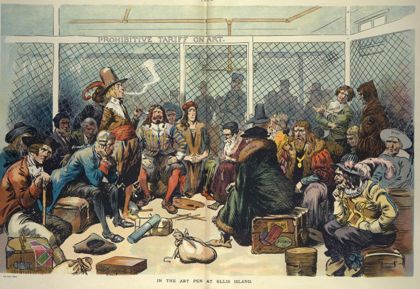
- 6. In the Art Pen at Ellis Island (1908, Unidentified artist)
1871-1908Grades 6-8, 9-12Political cartoons⏱ 30-45 min
For teachers
Viewpoints in this packet
- The Chinese Question: Nast opposed anti-Chinese laws; supporters of restriction argued Chinese labor lowered wages.
- Welcome to All!: Keppler, himself an immigrant from Austria, generally favored open immigration.
- The Anti-Chinese Wall: Puck opposed Chinese exclusion; supporters of the law argued it protected American workers.
- The Only One Barred Out: Critical of the exclusion law.
- Looking Backward: Critical of immigration restriction; supporters of limits argued new arrivals strained cities and wages.
- In the Art Pen at Ellis Island: Critical of the art tariff.
6 stations · 1898-1899
Expansion & Empire, 1898-1899
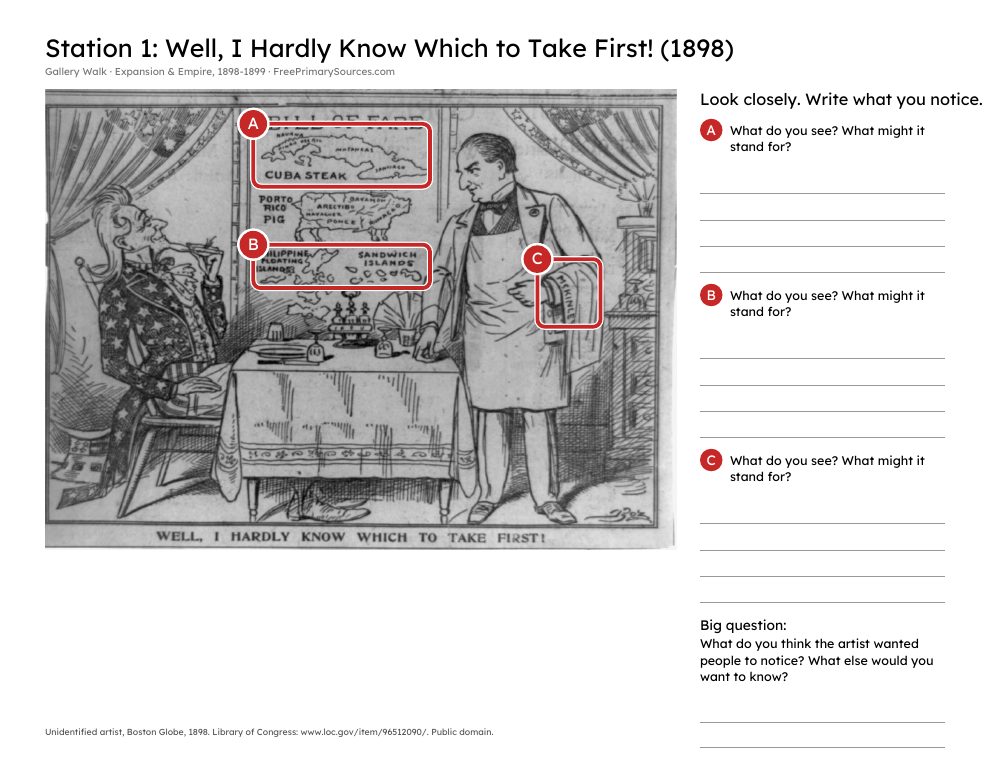
The 1898 war with Spain and the debate over the Philippines, with pro- and anti-expansion cartoons.
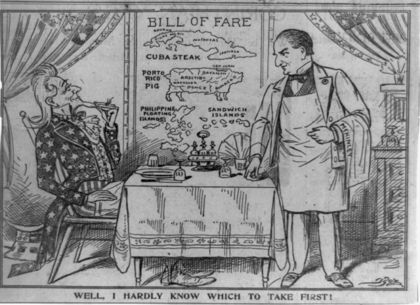
- 1. Well, I Hardly Know Which to Take First! (1898, Unidentified artist)
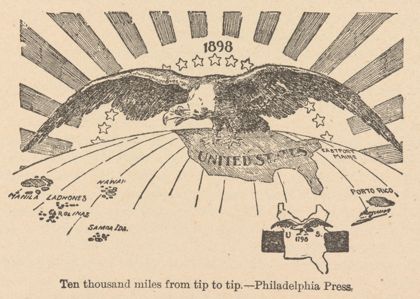
- 2. Ten Thousand Miles from Tip to Tip (1898, Unidentified artist)
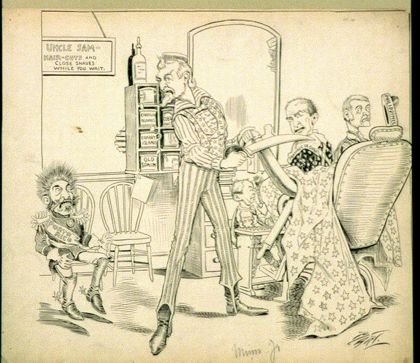
- 3. Uncle Sam's Barber Shop (1898, Unidentified artist)
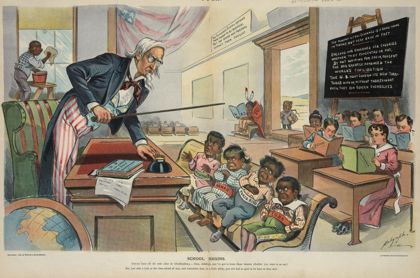
- 4. School Begins (1899, Louis Dalrymple)
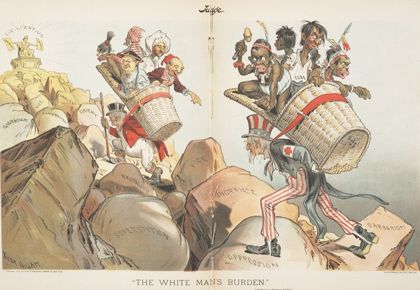
- 5. "The White Man's Burden" (Apologies to Rudyard Kipling) (1899, Victor Gillam)
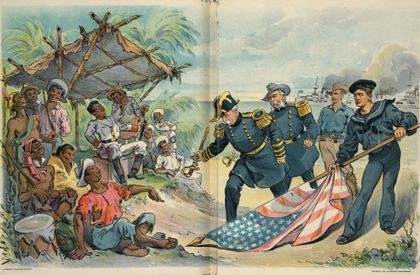
- 6. The Dream of the Anti-Expansionist (1899, Udo J. Keppler)
1898-1899Grades 9-12Political cartoons⏱ 30-45 min
For teachers
Viewpoints in this packet
- Well, I Hardly Know Which to Take First!: Lighthearted; readers then and now differ on whether it approves of expansion.
- Ten Thousand Miles from Tip to Tip: Celebrates expansion.
- Uncle Sam's Barber Shop: Artist unidentified; viewpoint is open for students to judge.
- School Begins: Scholars disagree whether Puck meant this to support or mock expansion; let students argue it.
- "The White Man's Burden" (Apologies to Rudyard Kipling): Judge was a Republican magazine that supported expansion; anti-imperialists strongly rejected this view.
- The Dream of the Anti-Expansionist: Mocks the anti-expansionist position.
6 stations · 1909-1919
Votes for Women, WWI & the Peace
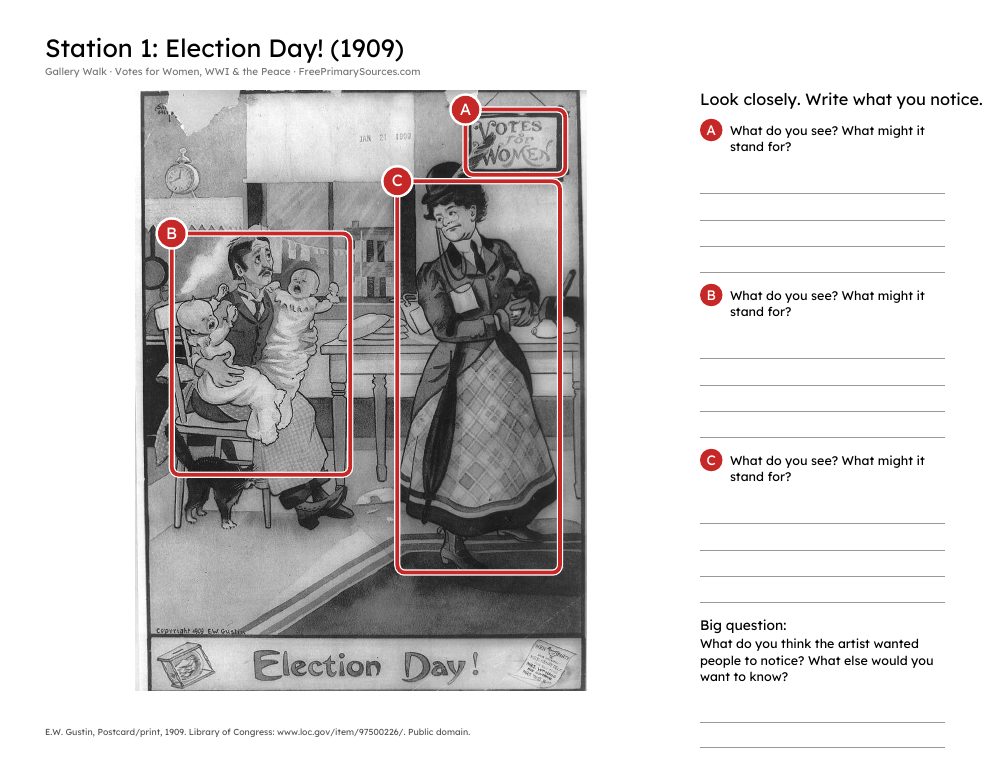
Cartoons for and against women's suffrage, the Fourteen Points, and the Senate fight over the League of Nations.
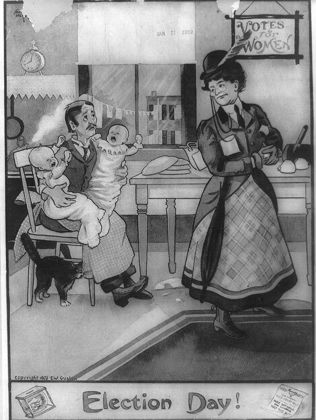
- 1. Election Day! (1909, E.W. Gustin)
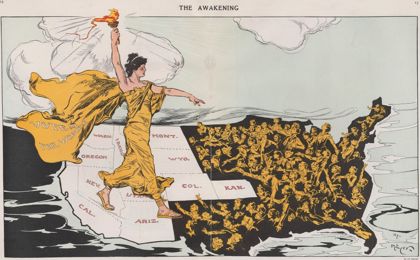
- 2. The Awakening (1915, Henry "Hy" Mayer)
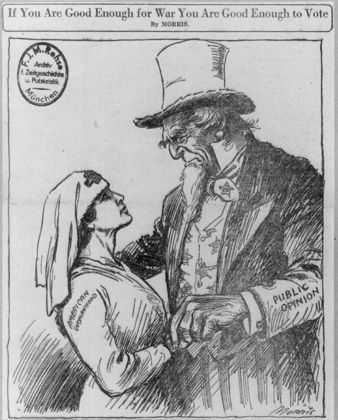
- 3. If You Are Good Enough for War You Are Good Enough to Vote (1917, Morris)
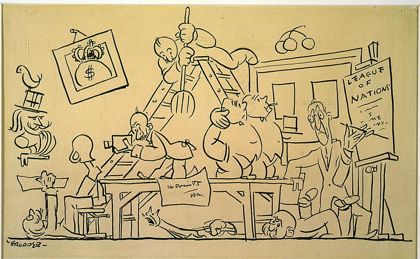
- 4. Forming the League of Nations (1918, William Gropper)
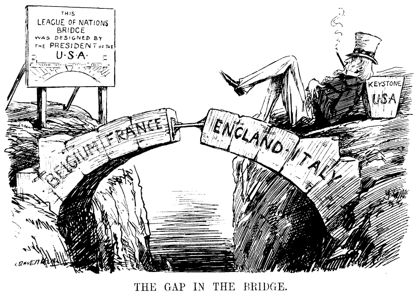
- 5. The Gap in the Bridge (1919, Leonard Raven-Hill)
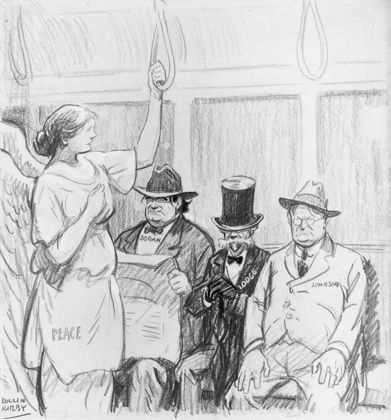
- 6. Refusing to Give the Lady a Seat (1919, Rollin Kirby)
1909-1919Grades 6-8, 9-12Political cartoons⏱ 30-45 min
For teachers
Viewpoints in this packet
- Election Day!: Argues against women's suffrage by imagining what would happen at home.
- The Awakening: Supports women's suffrage.
- If You Are Good Enough for War You Are Good Enough to Vote: Supports women's suffrage. The round stamp is from a German archive that collected the clipping.
- Forming the League of Nations: Gropper was a radical (left-wing) cartoonist who distrusted governments and business leaders.
- The Gap in the Bridge: A British view, critical of the U.S. staying out.
- Refusing to Give the Lady a Seat: Kirby's paper supported the treaty; Lodge and others argued the League would limit U.S. independence.